



Innovation in Teaching Award

Alt Text

The Cognella Innovation in Teaching Award for Family Science

2025 Winners

FIRST PLACE – TYLER JAMISON – UNIVERSITY OF NEW HAMPSHIRE

Our judging panel was impressed with how Dr. Tyler Jamison, an associate professor of human development and family studies at the University of New Hampshire, developed the Tell a Story About Love project for her Intimate Relationships and Families course. This program introduces undergraduate students to qualitative research by having them facilitate a conversation between two individuals in a romantic relationship. Students complete a formal consent process, introduce the prompt, “Tell me a story about a time you felt love by me,” and then step back while the couple shares.

Students are evaluated on their ability to follow the research protocol, submit a transcript and recording, and reflect meaningfully on what they learned. In their written reflections about the project, many describe the emotional power of observing vulnerability and love between the participants, as well as the challenge of creating space for authentic conversation. Students consistently recognize the professional value of facilitating dialogue, and many express pride in completing a formal research task.

To build on this learning, Dr. Jamison invites students to join her research team to help process and code data collected by their classmates. Over the past three years, 25 undergraduates have completed training and contributed to transcript cleaning, coding, and analysis. This integrated model of coursework and collaborative scholarship enhances student engagement, supports, mentorship, and contributes to Family Science research.

With this innovation, Dr. Jamison is introducing future professionals to qualitative research in a way that both sparks curiosity and equips them with the knowledge and skillsets they need to become competent and compassionate researchers.

Tyler Jamison, Ph.D. is an associate professor at the University of New Hampshire’s Department of Human Development and Family Studies. Her research focuses on romantic development—the process by which individuals build the capacity to form and maintain the types of relationships they desire through interactions with family, peers, friends, and romantic partners. She specializes in emerging adulthood, a developmental stage when people begin to establish lasting patterns and make critical decisions about their romantic lives. Her recent work explores teen dating violence and prevention or intervention strategies to disrupt unhealthy relationship patterns.

Dr. Jamison is a qualitative family scholar and educator who collaborates with a multi-disciplinary team of colleagues and undergraduate students. Her methodological expertise has been featured in academic books, webinars, and invited presentations. She is also actively engaged in public scholarship through her blog Assembly Required on Psychology Today, as Co-editor of the Digital Scholarship Board for the Journal of Family Theory and Review, and through her leadership with Relevate, a team that creates accessible research-based resources for the public.

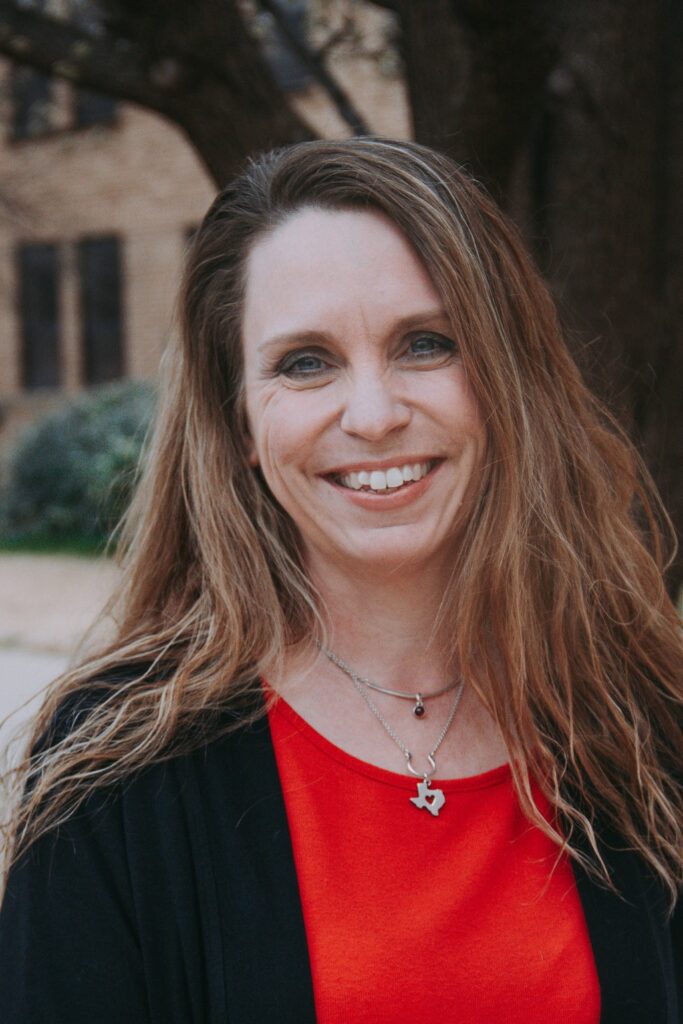
SECOND PLACE – ALISHA M. HARDMAN – KANSAS STATE UNIVERSITY

The judging panel was impressed by how Alisha M. Hardman, an associate professor at Kansas State University, has integrated a variety of experiential and problem-based learning strategies within her courses. As a certified Project FORECAST facilitator, she is able to facilitate Problem-Based Learning-Simulations, which allow learners to roleplay, observe, and see the impact of their decisions in real-time as they simulate real-world scenarios, and provide learners with an opportunity to apply the knowledge they have learning in classes to better prepare them for the complex challenges of trauma-informed care. Dr. Hardman implements the child abuse disclosure simulation in a colleague’s HDFS 305 Family Violence Across the Life Course class and recently collaborated with that colleague to co-develop a PBL-S on elder abuse and piloted that simulation in the course in Spring 2025.

Additionally, in Program Development and Implementation, a family life education methodology course, Dr. Hardman implements the brain architecture game, in which students work in teams to build a brain. She uses this interactive game to reach about risk and protective factors as students see how life experiences (positive, tolerable, and toxic) impact the growth and development of the brain. This hands-on experience demonstrates for students the importance of preventing risk factors and promoting protective factors to foster optimal development of children.

Dr. Hardman’s innovations bring learning to life, and we are proud to honor her creative and effective learning methods.

Alisha M. Hardman is an associate professor in the Department of Human Development and Family Sciences. Dr. Hardman’s current scholarly pursuits center on applied research about family stress, crisis, and trauma with an emphasis on promoting relational health to prevent and protect against the effects of traumatic and adverse childhood experiences. She co-directed an Extension parenting education program in Mississippi from 2020 through 2023, leveraging 1.6 million dollars of external state funding to serve over 1,600 parents in the state. Dr. Hardman has over 15 years of experience developing, implementing and evaluating family life education and Extension programming. She was recently elected the Affiliate Councils president-elect to represent Affiliate Councils on the National Council on Family Relations (NCFR) Board of Directors. She holds a Ph.D. in curriculum and instruction from the University of Minnesota and an M.S. in family studies and human services from Kansas State University.


SECOND PLACE – SHERA THOMAS-JACKSON – TEXAS TECH UNIVERSITY

The judging panel was impressed with how Shera Thomas-Jackson, an assistant professor of practice at Texas Tech University, has integrated arts-based practices into her courses, encouraging students to express understanding of coursework through poetry, music, montages, blogs, podcasts, skits, and other media. In her Human Sexuality course, she replaced a final paper with a creative expression project and now has partnered with collaborators at two other universities to evaluate student learning outcomes. This creative approach has made the assignment both stimulating and intellectually rich for students. Although students still engage with the same volume of empirical research, the new format allows for more personal and expressive ways to connect with the material. Further evolving the project, Dr. Thomas-Jackson collaborated with one undergraduate and one graduate student to investigate how different artistic approaches—literal versus interpretive—impact student learning and enjoyment. Their research was presented at the Texas Tech University Undergraduate Research Conference in April 2025.

Dr. Thomas-Jackson has also been instrumental in establishing and supporting the student-led initiative, Healing in the Arts, a program that has hosted multiple performances, both in-person and virtually. Students are invited to share personal stories, which are then transformed into performances through dance, music, and theater by their peers. Each event includes a panel of experts following the performance, who share scholarship research and provide valuable resources to complement the artistic endeavors.

Dr. Thomas-Jackson’s innovations demonstrate the importance of art, creativity, expression, and mental health within education.

Shera Thomas-Jackson is the undergraduate program director, director of practicum experiences, and an assistant professor of practice in the Department of Human Development and Family Sciences at Texas Tech University. Her expertise and research focus on the breastfeeding relationships between mothers and their infants and how that relationship is affected by various psychosocial and physiological factors. Another area of ongoing research for Dr. Thomas-Jackson is student engagement. She is interested in student involvement in extracurricular activities such as student organizations, engaging in undergraduate research, and other enrichment activities.